

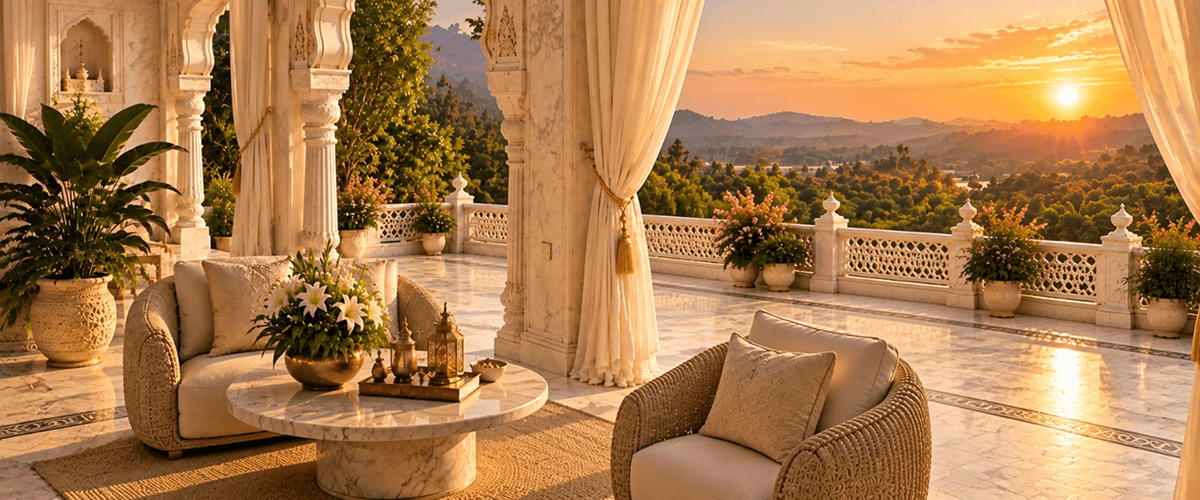
Heritage resort experiences in Rajasthan extend beyond just a wonderful stay at a hotel. This is because it involves visiting a place that has historical and architectural value that cannot be created over time. Across Rajasthan, the many havelis, palaces, forts, and royal residences are being beautifully converted into luxurious hospitality properties.
This offers a wonderful concept for travelers and property owners; a heritage estate can be a great place to stay, as well as having intrinsic value worth preserving. While normal hospitality properties are built taking into consideration the trends of the time, heritage estates derive their value from what exists in the place: the land, architecture, memories, and history.
Why Heritage Estates Are Different
Luxury in today’s times can be created at any place literally. However, there is one feature that cannot be bought using money for an authentic luxury property. This one feature is the feeling of authenticity, which makes the place unique and special. An authentic place can offer all these features through the means of stonework, courtyards, traditional gardens, woodwork, arches, and even proportions that belonged to an earlier era.
This will give the visitors who come to the place a feeling of luxury that is meaningful. This is not just about spending time at the place, but also being a temporary resident at a place that carries its own history.
A Heritage Resort Rajasthan Experience That Ages Gracefully
One such characteristic of the heritage resort property in Rajasthan that stands out is that it becomes even more distinct with each passing day. The modern hotel needs to be redesigned from time to time to stay relevant. However, the heritage resort, which has been restored thoughtfully, needs no such updating as the structure has been provided by the building itself; the hospitality, comfort, and modernization come next.
It is crucial to keep a balance here; otherwise, the property risks losing its character for the sake of modernization. The most successful heritage resorts manage to blend together the two ages – past and present. It is what makes heritage hospitality so special.
The Growing Appeal of Legacy Hospitality Investment
Discussions of hospitality focus on occupancy levels, room inventory, profitability, and return on investment. However, another aspect of hospitality in relation to heritage property is the value of identity. The investment in heritage property becomes particularly important for property owners who want to ensure that the asset can benefit several generations. Therefore, the goal is not only to create the hotel, but to preserve and grow an estate that is culturally and experientially valuable.
A heritage property managed effectively may be able to take advantage of several aspects:
- Unique positioning in the luxury travel market
- More emotionally engaged customers
- Architectural and cultural uniqueness
- Possibility for premium experiences and private events
- Possibility to have the value in the future related to unique estate
- Business of hospitality based on a physical legacy
- Indeed, owning the heritage property involves patience as restoration
Indeed, owning a heritage property involves patience, as restoration, conservation, maintenance, staffing, and operations require investments. The best heritage properties are thus created in the context of long-term planning.
Luxury Estate Ownership India: Looking Beyond the Property
The mode of owning estates in India is being transformed owing to the increasing luxury tourism business in the country. There are people who see the estate as their personal haven. In other instances, the estate acts as an accommodation destination for any private events or even both at once. The distinction between the two comes from the relationship between the owner and the property.
The old estate needs an accountable owner, as what comes next is solely dependent on how the restoration, landscaping, construction, management, sustainability, and representation of the place will be carried out.
From Ownership to Stewardship
There is an important difference between ownership and stewardship when it comes to historical sites. Ownership is concerned with the asset. Stewardship is concerned with what needs to be protected for future generations. This can affect everything from the materials used to renovate the site to the use of traditional craftsmanship by locals. It can even affect the hospitality experience by letting guests enjoy local traditions without making them tourist attractions.
Why Travellers Value Stories as Much as Luxury
The industry of luxury travel has changed dramatically. What people are looking for now is not just a travel experience, but an authentic and personalized one. Heritage properties provide the perfect stage for telling stories. You can tell the story of the place through its architecture, food habits of the area and gardens, which reflect the relationship between the property and its surroundings. The smallest elements, such as an archway, a fresco, and textiles, could be used in the process of telling the story.
And this applies especially to the state of Rajasthan, which has had a deep connection between hospitality and history since time immemorial. Hence, staying at a heritage property becomes something much more than simply staying at a hotel.
Building a Legacy That Can Be Inherited
But what truly makes a heritage estate is not its grandeur at all. It lies in whether its spirit will be able to continue living on for future days.
To achieve this, one needs to take a long-term perspective into account:
- Preservation – Conserving as much of the original architecture and culture as possible
- Restoration – Fixing historical aspects rather than replacing them needlessly.
- Hospitality – Offering modern comfort without compromising the property's identity.
- Sustainability – Using water, energy, landscape and resource management wisely.
- Connection to the local – Sustaining local crafts, cuisine, employment, and culture.
- Future planning – Making decisions that will stand up for future generations of owners and visit
When all of this is put into practice, the estate will turn from being just a profitable hospitality estate into something far more meaningful.
A New Definition of Luxury
Possibly the greatest feature of any heritage property is its uniqueness. New luxury hotels can be designed and built; history cannot be created. That is the reason why the heritage resort of Rajasthan stands out in luxury hospitality. The value of the property stems from a blend of its survival and what ownership has added to it. For tourists, it is an experience of significance and character. For owners, it is creating something more than themselves.
Conclusion
Luxury resort in Rajasthan presents a new definition of luxury with the help of the four primary elements: architecture, heritage, craftsmanship and continuity. With the appearance of luxury travelers expecting the experience and realization of potential of becoming a unique property by the owner, there arises an opportunity for heritage estates to become a long-lasting hospitality destination. The true inheritance is not only the estate itself but also its ability to remain unique and provide people from future generations with an incentive to come back.
Experience luxury of hospitality approach, reflecting the heritage of the place through your stay in Aurette. Experience the retreat that honors the past, appreciates the present and builds the future heritage. Read more about Aurette heritage resort experience.