

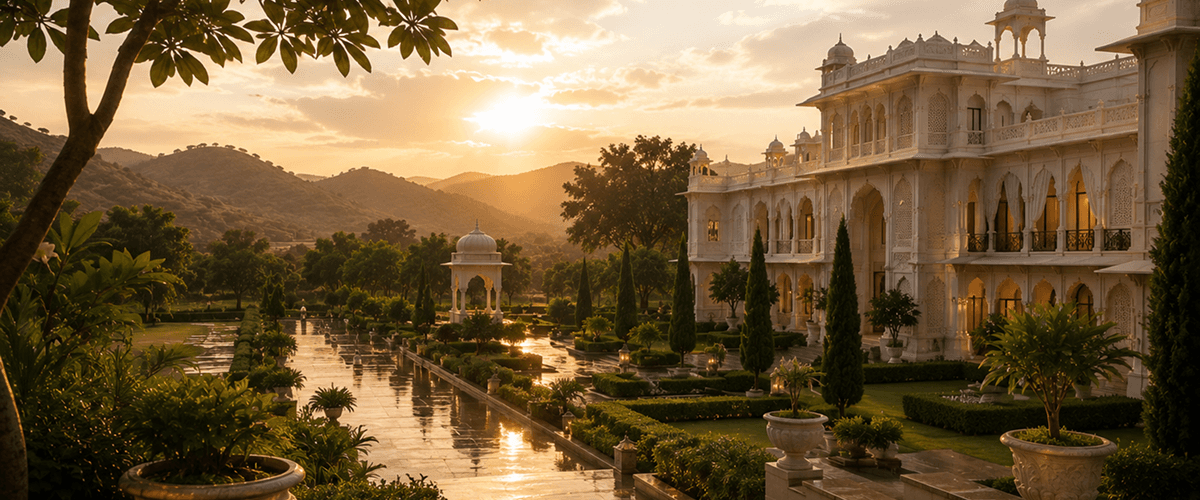
It is essential to note that investing in the hospitality industry goes beyond the mere possession of a good piece of land. The real point is whether such an investment will retain its relevance, attractiveness and revenue-generating capacity throughout various seasons in which tourism can be observed. For those who are considering year-round returns from the resort in India, this becomes very crucial since the luxury resort requires not only seasonally driven demands for creating sustainable value.
The concept of Aurette revolves around this idea. Being situated on Nathdwara Road adjacent to Udaipur, the luxury hospitality asset combines the elements of accommodation, wellness, celebration, dining, leisure, and professionally managed hospitality. In addition, the proximity of the destination to such tourist spots like Udaipur, Nathdwara, Kumbhalgarh, and other region-specific locations makes it possible to attract visitors from various tourism markets.
For an investor, the diversification of demand plays a critical role since the monsoon season can generate tourism related to nature and wellness, while the festive season generates leisure and celebratory tourism, weddings, and other important occasions.
Why Seasonality Matters in Resort Investment
Hospitality assets perform differently from conventional residential assets. While a residential asset may generate income from the somewhat predictable tenant life cycle, a resort asset relies on occupancy, pricing, events, food and beverage, experience, and the broader tourism ecosystem. This is why seasonality becomes a significant factor when investing.
A resort asset that relies solely on a single peak season is bound to experience volatility. The well-placed hospitality asset, on the other hand, creates several reasons for guest visitation throughout the year.
Monsoon: Turning the Quiet Season Into a Luxury Experience
Monsoons have always been considered difficult times for the Indian hospitality industry. However, in the case of Rajasthan, monsoon season transforms the look of the area completely. Monsoon transforms the arid Aravallis into lush green areas that have cool temperatures and new vistas. Thus, for luxury travelers, there is an option to explore Rajasthan differently without getting into the heat of the summer months. A well-conceived monsoon luxury resort can sell much more than rooms.
Various factors at Aurette make one want to stay there even in the rains. These include the environment, large estate area, and wellness factor.
What can drive monsoon demand?
- Wellness and rejuvenation stays
- Nature-focused getaways
- Couples and private retreats
- Short luxury escapes from nearby cities
- Experiential travel
- Indoor celebrations and intimate gatherings
- Longer weekend stays
This matters from an investment perspective because different guest motivations can help reduce dependence on one narrow travel season.
Festive Season: When Luxury Travel Accelerates
While monsoon provides an opportunity to attract tourists who desire peace, the festive season demands something very different from travelers. The festive season in India automatically calls for the participation of families in the holiday-making process and leisure travel. It is a known fact that premium travelers seek destinations that offer accommodation and experience together in one place.
This particular destination has a unique edge due to the fact that Udaipur has a reputation internationally as a destination for heritage, luxury, and celebration. Aurette being located near Udaipur and Nathdwara makes it part of the tourist ecosystem and, at the same time, a hidden resort destination.
For the investment made in a hotel during the festive season, this particular season is very relevant due to the fact that apart from booking of rooms, guests might indulge in activities which will bring revenues to the hotel.
Destination Weddings Add Another Demand Engine
The discussion of luxury hospitality in Udaipur should not overlook the subject of weddings. Destination weddings have gained prominence in the context of India’s premium tourism market, with people desiring hotels that will cater to accommodation as well as other hospitality needs all at once.
This is the rationale behind Aurette's design. It has vast outdoor lawns, a theatre space, premium indoor banqueting options, and other celebration areas on its property. The hotel claims that it can cater to over 1,500 people through its event facilities.
The obvious point for investors is the potential of weddings in driving demand across various types of hospitality offerings.
| Demand Driver | Potential Hospitality Contribution |
|---|---|
| Luxury stays | Room and suite occupancy |
| Destination weddings | Rooms, banquets, food and events |
| Wellness travel | Spa, wellness and accommodation |
| Festive holidays | Family stays and dining |
| Monsoon escapes | Short breaks and experiential stays |
| Corporate/private events | Meeting and event-related demand |
| Leisure tourism | Accommodation and experiences |
The objective is not to depend on one of these categories individually. The strength lies in creating a destination where several demand streams can coexist.
Why Udaipur Supports a Year-Round Hospitality Strategy
Location is the most crucial aspect of hospitality investment. The resort of Aurette is situated on Nathdwara Road, about 30 minutes away from Udaipur; Kumbhalgarh Fort is an hour away from the resort, and Shrinath Ji Temple and Statue of Belief is only 15 minutes away from the resort. This allows the resort to cater to various types of guests.
For example, one tourist may come to Udaipur for its heritage and luxury tourism. The other may visit Nathdwara for spiritual purposes. While a family may do both, a group for their wedding will be more interested in the facilities available at the resort. Such diversity is beneficial since the demand for tourism cannot always be unidirectional.
A resort which is part of the destination ecosystem has the potential to tap into various types of travel instead of focusing on the regular holiday traffic only.
The Aurette Investment Model
It states that their model represents professionally managed hospitality ownership, whereby the investor owns the asset while the operations are being managed by the professional group. Currently, there is a guarantee of 7% per annum ROI, plus a 50% profit share in case the resort is operational, on the basis of the terms and conditions of investment. It was supposed to provide a combination of both asset ownership and a hands-off approach to operations.
It matters since in traditional cases of second-home ownership, all the tasks, such as maintenance, employment, promotion, occupancy, and general management of the property fall upon the shoulders of the owner. Also, Aurette states complimentary stays and wedding-related ownership perks as part of its offerings for the investors.
From Monsoon to Festive: The Bigger Investment Picture
But the best argument for having hospitality services all-year-round is not in having every single month perform equally well. No professional hospitality service should expect that. Instead, what needs to happen is for a portfolio of demand seasons to be created.
The Monsoon season can be used for wellness and experience-based traveling. The post-Monsoon season can use better weather and leisure activities to its advantage. The festive season can include family vacations and premium stays. The wedding season can generate large groups of guests, while winter tourism can enhance leisure and destination traveling.
While the performance of each season will certainly depend on occupancy, pricing, operations, market situations, and how the service executes itself, from an investor's point of view diversification of demand is much more important than one peak season.
Luxury Is No Longer Just About Occupancy
In today’s luxury resort, more than just occupying rooms is required. Indeed, contemporary luxury travellers have begun evaluating the entire experience, ranging from privacy, architecture, wellness, dining, the environment, activities, and the exclusivity of the destination.
This is what Aurette’s retreat has been designed for; accommodation, wellness, celebrations, private sanctuaries, leisure and experiences are all included. This is important to an investor, as a hospitality property with diverse elements of experience will present more possibilities for guest engagement. The room is the beginning. The destination is the product.
A Different Way to Look at Resort Ownership
The most compelling hospitality investments are perhaps not those that look good on the brochure. They are those whose asset, location, operations, and demand strategies all work together.
What Aurette combines in one concept is a large luxurious resort estate around Udaipur, professional hospitality management, different accommodation types, dedicated facilities for events, wellness programs, and an ownership structure focused on value. This is really what makes the idea of year-round returns from a resort in India worth looking at. It is not just about owning a room at a resort. It is about becoming a part of a hospitality asset that will stay relevant through different occasions of travel.
Conclusion
Seasonality need not necessarily be perceived as a threat by resort owners. In case there are several reasons for tourists visiting the area where the resort is situated, then it becomes an added advantage. The positioning of Aurette in the vicinity of Udaipur and Nathdwara, along with its luxury hospitality services, wellness package, facilities for celebrations, and professional management structure, forms the basis for attracting more customers all through the year. Investors interested in resort returns in India all through the year must have an open mind to this end.